Best HWID Spoofer Compared to Free Tools and Why a Paid License Wins
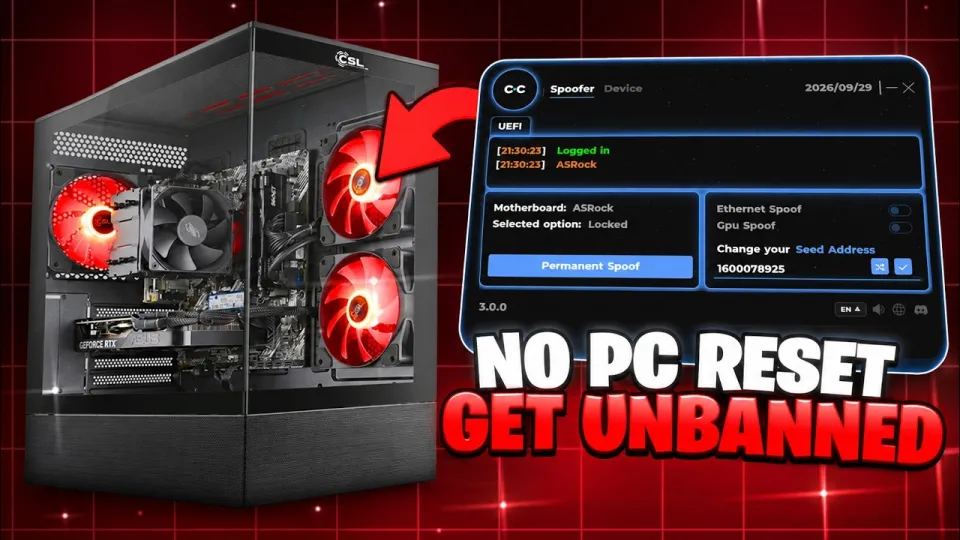
· based on the channel clixx
Key takeaways
- A HWID spoofer replaces the hardware identifiers a game or anti-cheat reads, so a banned machine reports as a new one.
- Free spoofers typically change only a few IDs and revert after a reboot; paid tools target permanent, disk-level spoofing.
- The tool shown in the clixx breakdown is distributed through cethcheats.cc and covers Fortnite, Warzone, Rust, CS2, Rainbow Six Siege, Apex Legends and Valorant.
- Coupon code DENYS takes 5% off at that store.
- Spoofing a hardware ID does not remove an account ban; the account itself stays banned.
The best HWID spoofer is a paid, permanently applied tool that rewrites the full set of hardware identifiers — disk serials, motherboard and BIOS data, SMBIOS strings, MAC addresses and registry traces — rather than a free utility that changes two or three values and resets on reboot. The tool walked through in the clixx tutorial is distributed via the CethCheats store, where a license covers Fortnite, Warzone, Rust, CS2, Rainbow Six Siege, Apex Legends and Valorant, and coupon code DENYS takes 5% off at checkout.
What a HWID spoofer actually changes on your PC
A HWID spoofer intercepts or rewrites the hardware identifiers that a game client and its anti-cheat collect during launch, so the machine presents itself as a different computer. The identifiers that matter most in practice are the ones that survive a Windows reinstall: the physical disk serial number, the volume serial of the system partition, the motherboard and BIOS identifiers, the SMBIOS and DMI strings, the machine GUID in the registry, and network adapter MAC addresses. A ban is usually tied to a combination of these, which is why changing just one of them rarely helps.
There are two broad approaches. The first is a driver-level hook that feeds fake values to any process that asks for them while the tool is running — simple, but it only works while the spoofer is active. The second is a permanent rewrite: the tool writes new serials into the disk firmware layer or the volume boot record, edits SMBIOS tables and cleans the registry traces, so the changes persist after a reboot and after the spoofer is closed. Permanent spoofing is what most people mean when they search for a perm HWID spoofer, and it is the category where paid tools separate from free ones.
Best HWID spoofer compared: paid permanent tools versus free spoofers
The core difference between the best HWID spoofer and a free one is coverage and persistence, not the interface. A free spoofer usually touches the volume serial and a registry key or two, gets detected by the anti-cheat's integrity checks within days, and stops working after a Windows update. A paid tool maintains a driver that is updated against current anti-cheat builds, covers every identifier the client reads, and keeps the spoof in place until you deliberately revert it.
- Identifiers covered: free tools typically handle 1–3 values; paid spoofers target disk, volume, SMBIOS, MAC, registry and machine GUID together.
- Persistence: free spoofers are usually session-based or revert on reboot; permanent spoofers survive restarts and Windows updates.
- Game support: a general-purpose spoofer covers Fortnite, Valorant, Rust, Apex Legends, CS2, Warzone and FiveM; free tools are often built for a single title and break when that game patches.
- Maintenance: paid licenses include updates after anti-cheat patches; free tools are abandoned.
- Risk: unsigned or leaked free spoofers are a common delivery route for malware and are frequently flagged by the anti-cheat itself.
If your goal is simply to test whether a spoof works, a free tool is enough to see the concept. If you have a permanent ban on a machine you actually play on, the paid route is the one that saves time.
How to set up the spoofer from the clixx tutorial
The setup in the clixx breakdown follows the standard order for a permanent hardware ID spoofer, and the order matters because the tool needs a clean state before it writes new identifiers. The walkthrough covers the interface, the configuration panel, the available system tools and the installation step, and the whole process takes a few minutes on a normal desktop.
- Disable antivirus real-time protection and Windows Defender tamper protection temporarily — driver-level spoofers are almost always flagged as false positives, and the tool cannot write to disk or SMBIOS while those services block it.
- Close the game, the launcher and any anti-cheat service, then reboot so no protected process is holding the identifiers you are about to change.
- Run the spoofer as administrator, open the configuration tab and select what to spoof — disk serials, volume ID, SMBIOS, MAC address and registry cleaners are usually separate toggles.
- Apply the spoof, wait for the confirmation, then shut the machine down completely rather than restarting, so the new disk-level values are picked up on the next cold boot.
- Re-enable your antivirus, launch the game on a fresh account and verify that the ban no longer follows the machine.
One point the tutorial makes implicitly but is worth stating plainly: the spoofer changes the machine, not the account. A banned account stays banned, so you need a new one, and any HWID ban fix only helps if the account side is handled separately.
Which games the spoofer covers and how compatibility works
Compatibility is the second thing to check after persistence, because a spoofer that works on Rust may not touch the identifiers Valorant's Vanguard reads. The build shown in the video lists Fortnite, Warzone, Rust, CS2, Rainbow Six Siege, Apex Legends and Valorant, plus FiveM for GTA roleplay servers, which use their own separate ban system tied to Rockstar and server-side identifiers.
Coverage differs by anti-cheat. Kernel-level systems such as Vanguard and the Ricochet builds used in Call of Duty are the strictest and check SMBIOS and disk serials most aggressively, which is why a permanent spoof rather than a session hook is required. Fortnite's Easy Anti-Cheat and Rust's EAC setup are more forgiving of volume serial changes but still read the disk. FiveM bans are often server-specific, so a general HWID spoofer helps with the client side while individual servers may keep their own records. Before buying, confirm that the specific title you were banned in appears in the supported list for the current build, since anti-cheat updates can temporarily break support for one game while others keep working.
What to check before you pay for a spoofer
Buying the right license comes down to four checks that take about five minutes and save you from a tool that stops working a week later. The first is update cadence: a credible vendor publishes changelogs after major anti-cheat patches, and a store page with no updates for months is a warning sign. The second is delivery: legitimate spoofers are sold through a storefront with a license key and a Discord for support, not through a random file host.
The third is scope — whether the license is permanent or temporary, and whether it is bound to one machine or transferable. A perm HWID spoofer license should state clearly how many activations you get, because a disk-level spoof is exactly the situation where you may need to reapply after a Windows reinstall. The fourth is the refund and support policy: driver-level software can be blocked by an antivirus or fail on specific motherboard chipsets, and you want a channel to resolve that. The store linked from the tutorial, cethcheats.cc, sells licenses with a Discord support server, and the DENYS coupon applies a 5% discount — worth using on a first purchase to test the tool on your own hardware before committing to a longer license.
Links from the video
- Store and product page: https://cethcheats.cc/
- Community and support: https://discord.gg/ceth
Summary
The best HWID spoofer for most players is a paid permanent tool that rewrites disk serials, SMBIOS, MAC addresses and registry traces together, because free spoofers cover too few identifiers and revert on reboot. The clixx tutorial walks through exactly that workflow — interface, configuration, installation and testing — for a build that supports Fortnite, Warzone, Rust, CS2, Rainbow Six Siege, Apex Legends and Valorant. Setup order matters: disable protections, close the game and anti-cheat, apply the spoof as administrator, then cold boot before logging in on a fresh account. If you want to try it, pick up a license at the CethCheats store and apply coupon code DENYS for 5% off. The video breakdown is by the channel clixx, which covers spoofer reviews and software tests.
Source: The Ultimate HWID Spoofer Tutorial 2026 – Full Guide To Get Unbanned Fast · Markdown version
Questions & answers
Does a HWID spoofer unban my game account?
No. A spoofer changes the hardware identifiers your PC reports, so the machine looks new to the anti-cheat. The banned account itself stays banned, and you need a fresh account to play again on the spoofed hardware.
Is a free HWID spoofer enough after a permanent ban?
Usually not. Free tools typically change only the volume serial and a registry key or two, revert on reboot and break after anti-cheat updates. A permanent paid spoofer covers disk serials, SMBIOS, MAC addresses and registry traces together, which is what most kernel-level anti-cheats check.
How long does the spoofing process take?
The setup in the clixx walkthrough takes a few minutes: disable antivirus protections, close the game and anti-cheat, run the tool as administrator, apply the changes and cold boot. Most of the time is spent on the shutdown and restart rather than the spoof itself.
Which games does the spoofer in the tutorial support?
The listed games are Fortnite, Warzone, Rust, CS2, Rainbow Six Siege, Apex Legends and Valorant, plus FiveM. Support can change after anti-cheat patches, so confirm your specific title is covered before buying a license.